|
|
|
|
|
1707
- ACT OF UNION
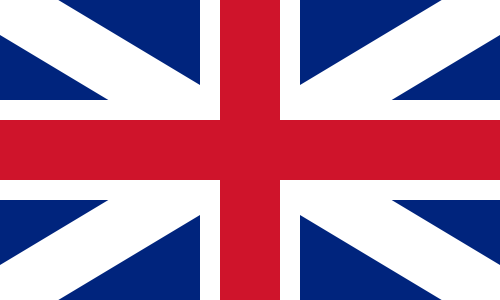
The new 1707 union flag, first used at sea in 1606 Most ordinary Scots saw the Union as a betrayal of such illustrious forebears as William Wallace and Robert the Bruce, who had fought and died for a free Scotland, independent of England. Many also saw it as a cynical betrayal of the great Declaration of Arbroath, signed in 1320 and which was also given support by the Pope in Rome. Perhaps
the most famous section of the Declaration runs as follows: "For
so long as a hundred of us remain alive, we will yield in no least way
to English dominion. For we fight, not for glory nor for riches nor for
honour, but only and alone for Freedom, which no good man surrenders but
with his life". Formal
recognition of Scotland’s independence was not given by the English
crown straight away however. That had to wait until 1328, with the
signing of the Treaty of Edinburgh between Robert the Bruce of Scotland
and King Edward III of England. This treaty was sealed by the marriage
of Robert the Bruce’s son David to Joanna, the daughter of Edward the
III. So
important was the Declaration of Arbroath, that the Declaration of
Independence by the United States of America was inspired and partially
based upon it, as can be justly argued, was the Unilateral Declaration
of Independence by Rhodesia in 1965. There is also a special resonance
in that case, given that the parents of the Rhodesian leader, Ian
Douglas Smith, were from Scotland. The Union of 1707 swept away Scottish independence with the stroke of a pen and to the great mass of Scottish people, insulted the memory and made meaningless the sacrifices of so many Scots, who had fought and died for Scottish independence over the long hard years of struggle with England. The
18th century could be seen as the beginning of the modern
age, the deceitful politics certainly do not
seem to have changed over the centuries. Capitalism was on the cusp of
its rapid rise during the Industrial Revolution, where money would be
king and ordinary people would be nothing more than commodities and the fodder of
profit for the wealthy elite. It
has been said that the callous and horrific evictions of both the
lowland and highland clearances provided the labour for the growing
industrial towns of Scotland, as the poor people of the clans were swept
from their ancestral lands by greedy and unfeeling landowners, who were
often the clan chiefs of those so cruelly evicted and left destitute.
The Union meant nothing to the abused and downtrodden of Scotland. At
the beginning of the 18th century two converging issues of
national importance to both Scotland and England finally came together.
Queen Anne of England was ailing and had produced no living heir to the
Kingdom. This would open the way for a claim to the throne of both
England and Scotland by the exiled Stuart dynasty, who were watchfully
biding their time in France. The English parliament did not want the
nightmare scenario of a return of the Catholic Stuarts with their
notions of ruling by divine right from God. The
Presbyterian Scots did not want a Catholic on the throne either but more
importantly, Scottish commercial interests wanted access to England’s
colonial possessions in North America to boost their weak and stagnant
economy. After many deliberations, meetings, bribes and concessions from
England, the Scottish parliament voted itself out of existence to the
great dismay of the ordinary people of Scotland. A proud nation had been
bought and sold by a cabal of nobles and businessmen, who all did very
well out of the deal. So
aggrieved by the situation were the people of Scotland, that they took
to wearing items of tartan as a protest at what they saw as an almost
treasonable act. Even well-to-do people in Edinburgh took to wearing
tartan, which firmly established it as a symbol of protest and
rebellion. This culminated in its overwhelming use by the rebel Jacobite
forces of Bonnie Prince Charlie in 1745, and its subsequent banning by
the British government for over thirty years, after the Jacobite defeat
at Culloden in 1746. Even
today, tartan is seen as a vitally important national symbol of
Scotland, as witnessed by the establishment of an official Scottish Register of Tartans in 2008. To many people, tartan is the very essence
of Scotland itself but tartan has also become a unifying symbol for all
the Celtic nations. The Cornish, the Welsh, the Manx, the Irish, the
Bretons, they all have their own tartans. In
the long term Scotland’s political, commercial and financial concerns
did benefit from the Union as the British Empire was established and so did
England’s, especially in respect to North Sea oil and its gushing
stream of tax revenues. Who is to say what the situation of both nations
would have been today without the Union of 1707? maybe it would have
been better or perhaps worse? That point will be argued back and forth
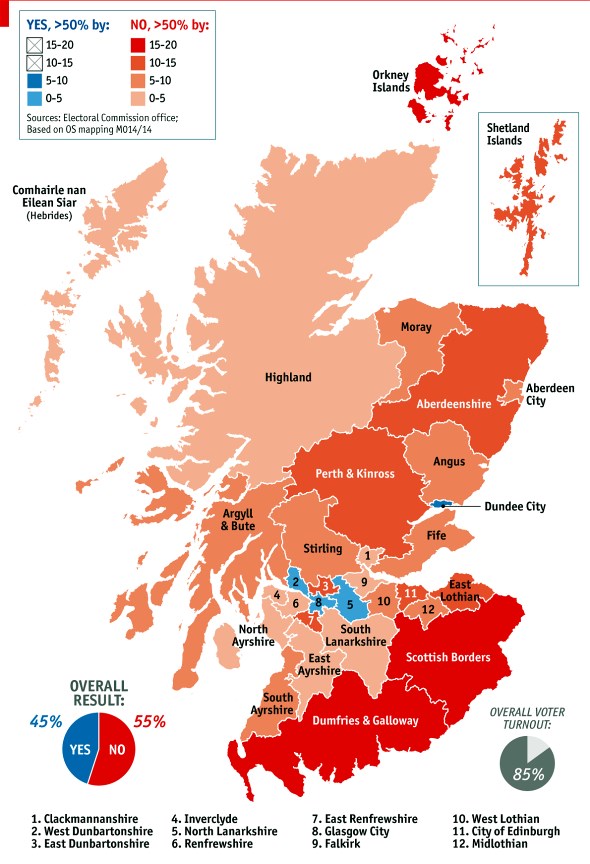
endlessly as it has always been. There is a new sense of national pride and identity arising in Scotland today, the re-establishment of an independent Scottish parliament in 1999 being representative of that rising sense of distinct nationhood at the beginning of the new millennium. Devolution, introduced by the New Labour government of Tony Blair has only fanned the flames of separatism and widened the cracks in the union. On the 14th September 2014, Scots went to the polls to vote on independence. The campaign leading up to the vote was marked by rancour and ill feeling on both sides, with the Scottish Nationalists in particular being accused of intimidation and threats of violence. On a turnout of 85%, 55% voted to remain a part of the United Kingdom. The Scottish people, in the end, preferred the union to independence. There was a distinct split across the country in terms of the voting. The English speaking areas of the country, especially in the Lowlands, Orkney and Shetland voted strongly to remain in the United Kingdom. The Gaelic speaking areas and the Highlands in general were strongly in favour of independence.
The voting patterns revealed much of the cause of the rancour prior to the polling stations opening. The independence campaign had opened the deep seated cultural, linguistic, religious and sectarian divisions within Scotland. With the UK wide Brexit vote on the 23rd June 2016, and the shock decision for many to leave the EU, the Scottish Nationalists have once again called for a further independence referendum. A vote for independenceha would certainly separate them from the rest of the UK, but it would instead shackle them to a federal EU super state, and its Euro currency. A strange kind of independence in all respects. Whether or not Scots really have a taste for full independence from the UK in the wake of Brexit, has yet to be tested at a fresh poll, but there may yet be a new standard symbolically planted at Glenfinnan. ‘Will ye no come back again?’ may not now apply to Bonnie Prince Charlie, but it could certainly apply to a new sovereign nation of Scotland. ©Copyright - James of Glencarr |